September Pub Talk
Science Pub: “Trials on the Farm: Innovators of the iPNW Dryland Wheat Agri-food System”
September 17th, 2024 | 6:00 – 7:00 p.m.
Sip your favorite brew, while you learn a thing or two! Science Pub is an opportunity to enjoy learning about interesting topics in an informal atmosphere. Just bring your curiosity and a thirst to learn!
There are 2 ways to be at this event:
- In Person – Paradise Creek Brewery will be seating indoors at 100% capacity and the pub talk will be broadcast/projected on a the large projection screen in the pub/restaurant area.
- On Zoom – Register for the Zoom Talk HERE. Place a food/drink order for pick up at Paradise Creek Brewery’s Downtown Restaurant – 245 SE Paradise St, Pullman. Local delivery is also available. Tip: Place your order early so it’s ready by Pub talk time.
See the Facebook event here
This month’s speakers:
Join Carol McFarland and David Huggins on Sept 17th for their pub talk, “Trials on the Farm: Producer Adaptation, Co-innovation and Research in the iPNW Dryland Wheat Agri-food System”
The Palouse is well-known for its grain production, and residents are familiar with the landscape of green, yellow, and brown fields as far as the eye can see. We don’t always get to hear from the people who are harvesting food from of these iconic hills. The On-Farm Trials podcast is working to collect stories of our region’s most innovative producers to hear about their trials with new practices on their farms, and how they are adapting to changing environmental, economic, and social conditions while meeting their production and stewardship goals. A primary objective of these stories is to accelerate co-innovation around sustainable intensification of cropping systems, and hear prospective research questions to inform useful and usable applied ag research. In the meantime, the collection of stories from farmers who have been impacting working lands for decades as part of a generations-long legacy of stewardship, is rich with producer perspectives on a wealth of topics affecting the entirety of the agri-food system. In her talk, Carol looks forward to sharing some of these rich stories and perspectives with you!
Applied agricultural research is at the core of supporting adaptation, sustainable intensification, and often serves to quantify trade-offs to production practices from greenhouse gas emissions to ecosystem service provision. The Long-Term Agroecosystem Research (LTAR) network is part of the USDA-ARS effort to put systems-level data behind on-farm management choices, and how they affect, soil, water, and air quality. Established in 1998 the RJ Cook Agronomy Farm(CAF) in Pullman, is a partnership between the USDA-ARS Northwest Sustainable Agroecosystems Research (NSAR) unit, Washington State University (WSU), University of Idaho (UI), and other public and private partners. The site joined the national LTAR network in 2012 and is now one of 19 sites that can share agroecosystems-based data, operationally explore conducting ‘network’ science, and inform practice and policy both at local levels and the national scale. In his talk, Dave will be sharing his many years of knowledge, success, and innovations in this area.
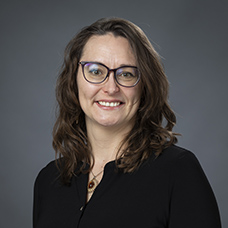
Carol McFarland is the research associate leading the PNW Farmers’ Network in association with collaborating researchers with WSU and USDA-ARS. Carol received her Bachelor’s degree in Agroecology from Montana State University, and came to WSU in 2013 after serving for two years with the UN World Food Programme in Southern Africa, where she found her passion for grassroots community-focused work. She completed her M.S. focused on the critical and invisible land degradation issue of soil acidification, liming, and developing outreach materials to help people learn more about those important topics. Carol is enthusiastic about applied ag science, cropping systems diversification and innovation, soil health, and driven to serve the ag community of the iPNW through a belief in the power of great conversations. She is diligently working to fulfill the mission to create spaces for exploring and sharing leading-edge ideas to advance resiliency in the agri-food system, and drive useful and usable research– on the farm, and in the lab, for the dryland grain production region of the iPNW.
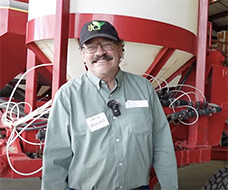
Dr. Dave Huggins earned his B.S. and M.S. degrees in forestry at the S.U.N.Y. College of Environmental Science and Forestry in Syracuse, NY. His first natural resource job was with the USDA Soil Conservation Service in Moscow, ID back in 1981. Since then he has spent the majority of his career working on sustainable agricultural issues in the Palouse region. Dave received his Ph.D. at WSU under Dr. Bill Pan conducting research on no-tillage cropping systems and N use efficiency. Subsequently, he became an Assistant Professor at the University of Minnesota before returning to the Palouse in 1997 as a USDA-ARS Research Soil Scientist, and in 2020, became the Research Leader of the Northwest Sustainable Agroecosystems Research Unit in Pullman, WA. Dr. Huggins had a leadership role in establishing the WSU Cook Agronomy Farm in 1998 as a new cropping systems research farm, and in its selection as one of ten original USDA Long-Term Agroecosystem Research (LTAR) national sites. He currently serves on the national LTAR leadership team, is the current scientific lead for the Cook Agronomy Farm LTAR site, and is also the co-Director of the Northwest Climate Hub. Dr. Huggins has been a P.I. or co-P.I. on 47 competitive grants totaling $37 million and has over 200 publications. He has served as Chair of the Soil and Water Management and Conservation Division of the Soil Science Society of America and as ex-officio board member of the Pacific Northwest Direct Seed Association. He is, of course, best known for his Ag. related poetry and award winning Harmonicat Graminae Grammy for “The AEZ Blues”.